
Planning Cancer Treatment in India? Read This Before You Decide

One of the first questions patients ask us is not about hospitals, doctors, or even treatment.

It’s much simpler.

“Can I really trust treatment in another country?”

If you’re considering traveling to India for cancer treatment, you’re probably carrying more than a medical diagnosis. You’re carrying uncertainty, fear, financial concerns, family expectations, and a hundred unanswered questions.

At Sila Med Tour, we speak with patients from Iraq, Sudan, Oman, Yemen, Nigeria, and many other countries every day. And we have noticed something important:

Most patients are not afraid of treatment.

They are afraid of making the wrong decision.

What if I choose the wrong hospital?

What if I spend all this money and don’t get the expected results?

What if I travel so far and discover there was a better option?

These are not negative thoughts.

They are responsible questions.

And before discussing treatment plans, costs, or hospitals, these questions deserve honest answers.

The Reality About Cancer Treatment

Cancer treatment has advanced tremendously over the last decade.

Today, many cancers that were once considered extremely difficult to treat now have multiple treatment options available.

Patients may benefit from:

  • Precision medicine
  • Targeted therapy
  • Immunotherapy
  • Robotic surgery
  • Advanced radiation therapy
  • Bone marrow transplantation
  • Multidisciplinary cancer care

However, there is one thing every patient should understand:

No ethical doctor can guarantee a cure.

And that’s actually a good sign.

Good doctors focus on probabilities, evidence, and personalized treatment—not unrealistic promises.

The goal is not false confidence.

The goal is informed confidence.

Why Many Patients Choose India

The decision to travel abroad for treatment is rarely based on cost alone.

Most patients choose India because they want three things:

Access to Better Expertise

Many leading Indian cancer specialists treat thousands of cases every year across a wide range of cancers.

Experience matters.

Especially when dealing with complex diagnoses, recurrent cancers, or advanced-stage disease.

Faster Access to Treatment

In some countries, patients may wait weeks or months for consultations, diagnostics, or treatment.

For cancer patients, time is important.

Many Indian hospitals can arrange consultations and treatment plans within days.

Affordable Without Sacrificing Quality

Patients are often surprised to discover that internationally accredited hospitals, advanced technology, and highly experienced oncologists can be available at a fraction of the cost charged in many Western countries.

But affordability should never be the only reason to choose a treatment destination.

Quality must always come first.

Before You Travel, Ask Better Questions

Many patients ask:

“Which hospital is the best?”

The better question is:

“Which hospital is best for my specific condition?”

A patient with leukemia may require a hospital known for Bone Marrow Transplant.

A patient with prostate cancer may benefit from a center specializing in robotic surgery.

A patient seeking immunotherapy may need access to advanced molecular diagnostics.

There is rarely one hospital that is best for everyone.

The goal is to find the right hospital for your diagnosis.

Don’t Focus Only on Hospital Rankings

A common mistake is choosing a hospital based solely on advertisements or popularity.

Instead, consider:

  • Doctor experience
  • Treatment specialization
  • Technology availability
  • Multidisciplinary care
  • Previous treatment history
  • Estimated outcomes
  • Follow-up support

The hospital matters.

But the treatment strategy matters even more.

If Previous Treatment Has Failed

Many international patients contact us after unsuccessful treatment elsewhere.

They often ask:

“Should I repeat the same treatment again?”

The answer depends on understanding what happened previously.

Important questions include:

  • Was the diagnosis fully accurate?
  • Was molecular testing performed?
  • Was the treatment response monitored correctly?
  • Are newer treatment options available?
  • Would another specialist approach the case differently?

Sometimes a fresh review reveals opportunities that were not previously considered.

This is why second opinions can be so valuable.

Not because the first doctor was wrong.

But because medicine is complex, and another perspective can provide additional clarity.

The Importance of a Personalized Treatment Plan

No two cancer patients are exactly alike.

Two patients may have the same diagnosis but completely different:

  • Age
  • Health condition
  • Genetic profile
  • Treatment goals
  • Medical history

That is why modern cancer treatment is becoming increasingly personalized.

The best treatment plan is not necessarily the most expensive.

It is the one that fits the patient’s specific medical situation.

What Patients Should Expect from a Medical Tourism Company

A medical tourism facilitator should not pressure patients into treatment.

Instead, they should help patients make informed decisions.

Patients deserve:

  • Honest guidance
  • Transparent pricing
  • Hospital comparisons
  • Access to multiple opinions
  • Clear communication
  • Ongoing support

At Sila Med Tour, we believe our role is not to convince patients.

Our role is to help them understand their options.

A Better Way to Think About Treatment Abroad

Traveling for medical care is a major decision.

But it doesn’t have to feel overwhelming.

The best approach is simple:

Pause.

Understand your diagnosis.

Review your options.

Ask questions.

Get a second opinion if needed.

Choose a treatment plan based on evidence—not fear.

Because confidence doesn’t come from promises.

Confidence comes from clarity.

Final Thoughts

If you’re considering cancer treatment in India, remember that the goal is not to find a guarantee.

The goal is to find the best possible medical team, the most appropriate treatment strategy, and a support system that helps you make informed decisions every step of the way.

At Sila Med Tour, we believe every patient deserves honest answers before treatment, compassionate support during treatment, and clear guidance after every medical decision.

Because when it comes to cancer care, information is powerful—but understanding is even more powerful.

FAQs

Q1. Is cancer treatment in India safe for international patients?
Yes. Many Indian hospitals are internationally accredited and offer advanced cancer care, experienced oncologists, and dedicated international patient services.

Q2. How much does cancer treatment cost in India?
The cost varies depending on the cancer type, treatment method, hospital, and stage of disease, but it is often significantly lower than in many Western countries.

Q3. Which are the best cancer hospitals in India?
Leading cancer hospitals include Medanta, Fortis Memorial Research Institute, Artemis Hospital, Max Healthcare, Apollo Hospitals, and BLK-Max Super Speciality Hospital.

Q4. Can I get a second opinion before traveling to India?
Yes. Most hospitals and medical tourism facilitators such as Sila Med Tour can arrange online consultations and expert second opinions before you travel.

Q5. How can Sila Med Tour help international cancer patients?
Sila Med Tour assists with medical report reviews, hospital selection, treatment planning, visa support, accommodation, airport transfers, and patient coordination throughout the treatment journey.
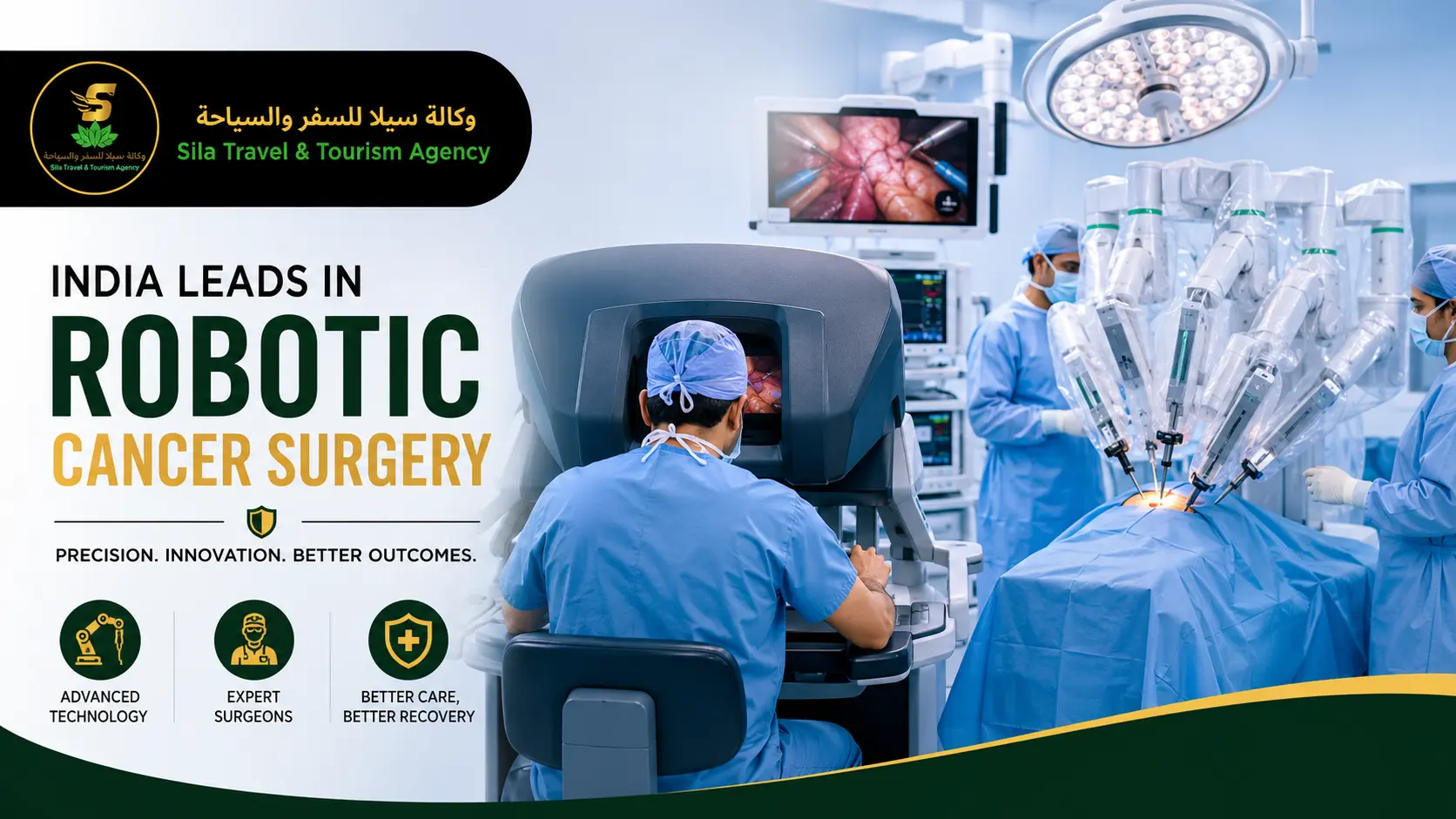

How India Became a World Leader in Robotic Cancer Surgery

A New Era in Cancer Treatment

Cancer treatment has evolved dramatically over the past two decades. What once required large incisions, lengthy hospital stays, and prolonged recovery periods can now often be performed through tiny incisions with remarkable precision. At the heart of this transformation is robotic cancer surgery, one of the most significant advancements in modern oncology.

Today, India has emerged as one of the world’s leading destinations for robotic cancer surgery. Patients from the Middle East, Africa, Central Asia, Europe, and beyond travel to India to access cutting-edge robotic procedures performed by highly experienced specialists at a fraction of the cost charged in many developed countries.

But how did India become a global leader in robotic oncology?

The answer lies in a unique combination of medical expertise, technological adoption, world-class hospitals, affordability, and a commitment to innovation.

Understanding Robotic Cancer Surgery

Despite the name, robots do not perform surgery independently. Instead, robotic systems are advanced tools that allow surgeons to operate with enhanced precision, flexibility, and control.

Using a robotic surgical platform, the surgeon controls robotic arms from a specialized console while viewing the surgical field through a high-definition 3D imaging system.

This technology enables:

  • Greater surgical precision
  • Better visualization of tissues
  • Enhanced dexterity
  • Reduced damage to surrounding structures
  • Improved patient outcomes

Today, robotic surgery is used to treat a wide range of cancers, including prostate cancer, kidney cancer, colorectal cancer, lung cancer, gynecological cancers, head and neck cancers, and gastrointestinal tumors.

India’s Journey Toward Robotic Surgery Excellence

India’s rise in robotic cancer surgery began with a vision to bring world-class medical technology within reach of patients across the globe.

Over the years, leading hospitals invested heavily in:

  • Robotic surgical platforms
  • Specialized training programs
  • Advanced cancer centers
  • International collaborations
  • Clinical research initiatives

As a result, India now hosts some of the largest robotic surgery programs in Asia, with thousands of successful cancer surgeries performed annually.

What initially started in a handful of major hospitals has now expanded across multiple cities including Delhi, Gurugram, Mumbai, Chennai, Hyderabad, Bengaluru, and Kolkata.

Why Robotic Surgery Is Transforming Cancer Care

Traditional cancer surgery often requires larger incisions and extensive tissue manipulation.

Robotic technology offers several advantages:

Greater Precision

Robotic instruments can move with a range and accuracy beyond the human hand, allowing surgeons to operate in complex anatomical areas with exceptional control.

Smaller Incisions

Most robotic procedures require only a few small incisions, reducing trauma to the body.

Reduced Blood Loss

The enhanced precision minimizes bleeding during surgery and decreases the need for blood transfusions.

Faster Recovery

Patients typically experience:

  • Less postoperative pain
  • Shorter hospital stays
  • Faster return to normal activities
  • Reduced risk of complications

Better Functional Outcomes

For cancers affecting delicate structures such as nerves and blood vessels, robotic surgery often helps preserve important functions while effectively removing tumors.

India’s Leading Robotic Cancer Surgery Centers

India is home to numerous hospitals recognized internationally for their expertise in robotic oncology.

Medanta – The Medicity, Gurugram

Medanta has established one of India’s most advanced robotic surgery programs, treating complex cancers across multiple specialties.

Fortis Memorial Research Institute (FMRI), Gurugram

FMRI combines robotic technology with multidisciplinary oncology expertise to deliver highly personalized cancer treatment.

Apollo Hospitals

Apollo’s network has played a pioneering role in introducing robotic surgery to India and continues to lead innovation in cancer care.

Max Super Speciality Hospitals

Max hospitals are known for advanced robotic procedures in urological, gastrointestinal, gynecological, and thoracic cancers.

Artemis Hospital

Artemis offers state-of-the-art robotic surgery programs supported by experienced surgical oncologists and comprehensive cancer care teams.

Types of Cancer Commonly Treated with Robotic Surgery in India

Prostate Cancer

Robotic-assisted radical prostatectomy has become one of the most commonly performed robotic cancer procedures.

Benefits include:

  • Improved cancer control
  • Reduced blood loss
  • Better preservation of urinary continence
  • Enhanced nerve preservation

Kidney Cancer

Robotic partial nephrectomy enables surgeons to remove tumors while preserving healthy kidney tissue whenever possible.

Colorectal Cancer

Robotic surgery provides exceptional precision in complex pelvic procedures, helping improve outcomes for colorectal cancer patients.

Gynecological Cancers

Robotic techniques are widely used for:

  • Cervical cancer
  • Endometrial cancer
  • Ovarian cancer

Head and Neck Cancer

Transoral robotic surgery (TORS) allows surgeons to access tumors through the mouth without external incisions.

Lung Cancer

Robotic thoracic surgery enables precise removal of lung tumors while minimizing trauma to surrounding tissues.

The Role of Expert Surgeons

Technology alone does not create successful outcomes.

India’s leadership in robotic cancer surgery is also driven by its highly skilled surgeons who have undergone specialized training in robotic procedures.

Many Indian surgical oncologists have trained at leading institutions in:

  • United States
  • United Kingdom
  • Germany
  • France
  • Singapore

Their experience allows them to perform highly complex surgeries while maintaining international standards of patient safety and clinical excellence.

World-Class Technology at Competitive Costs

One of India’s most significant advantages is affordability.

Patients can often save between 60% and 80% compared to treatment costs in North America, Europe, and many Gulf countries.

ProcedureApproximate Cost in India
Robotic Prostate Cancer SurgeryUSD 6,000 – 12,000
Robotic Kidney Cancer SurgeryUSD 7,000 – 15,000
Robotic Colorectal Cancer SurgeryUSD 8,000 – 18,000
Robotic Gynecological Cancer SurgeryUSD 6,000 – 14,000

Despite lower costs, patients receive treatment at internationally accredited hospitals equipped with the latest surgical technologies.

Why International Patients Choose India

Every year, thousands of international patients travel to India for robotic cancer treatment because of:

Access to Advanced Technology

Indian hospitals offer the same robotic platforms used in leading medical centers worldwide.

Highly Experienced Specialists

Patients benefit from surgeons who perform large volumes of robotic cancer procedures annually.

Minimal Waiting Times

Consultations, diagnostics, and surgeries can often be scheduled much faster than in many developed healthcare systems.

Comprehensive International Patient Services

Most major hospitals provide:

  • Medical visa support
  • Airport transfers
  • Accommodation assistance
  • Language interpretation
  • Dedicated patient coordinators

The Future of Robotic Oncology in India

India’s leadership in robotic cancer surgery continues to grow.

Emerging innovations include:

  • Artificial intelligence-assisted surgery
  • Image-guided robotic systems
  • Enhanced surgical navigation
  • Personalized cancer treatment planning
  • Integration with precision oncology

These developments are expected to further improve surgical accuracy, patient outcomes, and long-term survival rates.

As healthcare technology advances, India is well-positioned to remain at the forefront of robotic oncology innovation.

How Sila Med Tour Helps International Cancer Patients

At Sila Med Tour, we connect patients with India’s leading robotic cancer surgery specialists and hospitals.

Our services include:

  • Free medical report review
  • Specialist recommendations
  • Hospital selection assistance
  • Treatment cost estimates
  • Medical visa support
  • Airport pickup and transfers
  • Accommodation arrangements
  • Arabic interpretation services
  • Dedicated patient coordination

We ensure patients receive world-class care while enjoying a smooth and stress-free treatment journey in India.

Conclusion

India’s rise as a world leader in robotic cancer surgery is the result of visionary healthcare investments, cutting-edge technology, internationally trained surgeons, and patient-focused care.

Today, patients no longer need to travel to the United States or Europe to access advanced robotic oncology procedures. India’s leading cancer centers offer the same sophisticated technology, exceptional expertise, and outstanding outcomes at significantly lower costs.

For patients seeking precision, innovation, affordability, and hope, India has become one of the most trusted destinations for robotic cancer surgery in the world.

Contact Sila Med Tour today for a free medical opinion and personalized treatment plan from India’s leading robotic cancer surgery specialists.

FAQs

1. What is robotic cancer surgery?
Robotic cancer surgery is a minimally invasive procedure where surgeons use advanced robotic systems to perform precise cancer operations with enhanced control and visualization.

2. Which cancers can be treated with robotic surgery in India?
Robotic surgery is commonly used for prostate cancer, kidney cancer, colorectal cancer, lung cancer, gynecological cancers, and head and neck cancers.

3. Why is India famous for robotic cancer surgery?
India combines advanced robotic technology, internationally trained surgeons, world-class hospitals, and affordable treatment costs, making it a preferred destination for patients worldwide.

4. Is robotic cancer surgery safer than traditional surgery?
Robotic surgery often results in smaller incisions, less blood loss, reduced pain, faster recovery, and lower complication rates compared to traditional open surgery.

5. How can Sila Med Tour help patients seeking robotic cancer surgery in India?
Sila Med Tour assists with medical opinions, hospital selection, doctor consultations, treatment planning, visa support, accommodation, airport transfers, and complete patient coordination throughout the treatment journey.

Bladder Cancer Treatment Cost in India: Affordable Care with World-Class Outcomes

Bladder Cancer Treatment Cost in India

Bladder cancer is one of the most common cancers affecting the urinary system. It develops when abnormal cells grow uncontrollably in the lining of the bladder. Early diagnosis and timely treatment can significantly improve survival rates and quality of life. For international patients seeking advanced treatment at an affordable cost, India has become one of the most preferred destinations.

At Sila Med Tour, we help patients from the Middle East, Africa, Central Asia, and other regions access leading cancer specialists and internationally accredited hospitals across India.

Why Choose India for Bladder Cancer Treatment?

India is recognized globally for its high-quality cancer care, modern medical infrastructure, and experienced oncologists. Patients benefit from:

  • Advanced diagnostic technology
  • International-standard cancer centers
  • Highly experienced urologists and oncologists
  • Short waiting times
  • Personalized treatment plans
  • Affordable treatment costs compared to Western countries

Many Indian hospitals offer multidisciplinary cancer care, ensuring that specialists from different fields collaborate to provide the best treatment approach.

Cost of Bladder Cancer Treatment in India

The cost of bladder cancer treatment in India depends on several factors, including the stage of cancer, hospital selection, treatment method, and patient’s overall health condition.

Treatment TypeEstimated Cost in India
Initial Consultation & DiagnosisUSD 300 – 1,000
TURBT (Transurethral Resection of Bladder Tumor)USD 2,500 – 5,000
Radical CystectomyUSD 7,000 – 15,000
Partial CystectomyUSD 5,000 – 10,000
Chemotherapy (per cycle)USD 500 – 2,000
Radiation TherapyUSD 3,000 – 8,000
ImmunotherapyUSD 2,000 – 8,000 per session

These costs are approximate and may vary based on the hospital, doctor, and treatment complexity.

Symptoms of Bladder Cancer

The most common signs and symptoms include:

  • Blood in urine (hematuria)
  • Frequent urination
  • Painful urination
  • Pelvic pain
  • Lower back pain
  • Difficulty passing urine
  • Unexplained weight loss
  • Fatigue

If you experience any of these symptoms, consult a specialist immediately for evaluation.

Diagnosis of Bladder Cancer

Accurate diagnosis is essential for determining the stage and treatment plan. Common diagnostic tests include:

  • Urine analysis
  • Urine cytology
  • Cystoscopy
  • Bladder biopsy
  • CT Scan
  • MRI Scan
  • PET-CT Scan
  • Ultrasound

Indian cancer hospitals are equipped with advanced imaging and pathology facilities to ensure precise diagnosis.

Treatment Options for Bladder Cancer

1. TURBT (Transurethral Resection of Bladder Tumor)

This minimally invasive procedure is commonly used for early-stage bladder cancer. The surgeon removes the tumor through the urethra without making external incisions.

2. Radical Cystectomy

For muscle-invasive bladder cancer, complete removal of the bladder may be necessary. Surgeons may also reconstruct a new pathway for urine drainage using advanced reconstructive techniques.

3. Partial Cystectomy

In selected cases, only a portion of the bladder is removed while preserving bladder function.

4. Chemotherapy

Chemotherapy may be given before surgery, after surgery, or as the primary treatment in advanced-stage cancer.

5. Radiation Therapy

Radiation therapy uses high-energy beams to destroy cancer cells while preserving surrounding healthy tissues.

6. Immunotherapy

Modern immunotherapy treatments stimulate the body’s immune system to recognize and attack cancer cells more effectively.

Recovery After Treatment

Recovery varies according to the type of treatment received. Most patients can resume daily activities within a few weeks after minimally invasive procedures, while major surgeries may require longer recovery periods.

Regular follow-up visits, imaging studies, and laboratory tests are essential to monitor treatment success and detect any recurrence early.

Best Hospitals for Bladder Cancer Treatment in India

Sila Med Tour collaborates with some of India’s leading cancer centers and multispecialty hospitals, including:

  • Fortis Hospitals
  • Max Healthcare
  • Apollo Hospitals
  • Medanta – The Medicity
  • Artemis Hospitals
  • Amrita Hospital Faridabad
  • Manipal Hospitals

These hospitals provide comprehensive cancer care using the latest surgical, robotic, radiation, and immunotherapy technologies.

How Sila Med Tour Helps International Patients

Sila Med Tour provides complete medical travel assistance, including:

  • Free medical opinion review
  • Hospital and doctor selection
  • Treatment cost estimates
  • Medical visa assistance
  • Airport pickup and local transportation
  • Hotel and accommodation support
  • Arabic and multilingual interpretation services
  • Dedicated patient coordinator throughout treatment

Our goal is to ensure a smooth, comfortable, and stress-free treatment journey in India.

Conclusion

Bladder cancer treatment in India offers an excellent combination of advanced medical care, experienced specialists, and affordable pricing. Whether you require surgery, chemotherapy, immunotherapy, or a combination of treatments, India provides access to world-class cancer care at a fraction of the cost charged in many other countries.

Contact Sila Med Tour today to receive a personalized treatment plan and cost estimate from India’s leading bladder cancer specialists.

FAQs

1. What is the average cost of bladder cancer treatment in India?
The cost generally ranges from USD 2,500 to USD 15,000 depending on the stage of cancer, treatment method, and hospital selected.

2. Is bladder cancer treatment in India safe for international patients?
Yes. India has internationally accredited hospitals, experienced oncologists, and advanced cancer treatment facilities that attract patients from around the world.

3. How long do international patients need to stay in India for treatment?
The duration varies by treatment type. Surgical treatment may require 2–4 weeks, while chemotherapy or radiation therapy may require longer stays.

4. Can robotic surgery be used for bladder cancer treatment in India?
Yes. Many leading hospitals in India offer robotic-assisted bladder cancer surgery, which can reduce blood loss, pain, and recovery time.

5. How can Sila Med Tour help with bladder cancer treatment in India?
Sila Med Tour assists with medical consultations, treatment planning, hospital selection, visa support, accommodation, airport transfers, and language interpretation services.

Get Free Medical Consultation

Fill the form and our team will connect with you instantly.