A New Era in Cancer Treatment
Cancer treatment has evolved dramatically over the past two decades. What once required large incisions, lengthy hospital stays, and prolonged recovery periods can now often be performed through tiny incisions with remarkable precision. At the heart of this transformation is robotic cancer surgery, one of the most significant advancements in modern oncology.
Today, India has emerged as one of the world’s leading destinations for robotic cancer surgery. Patients from the Middle East, Africa, Central Asia, Europe, and beyond travel to India to access cutting-edge robotic procedures performed by highly experienced specialists at a fraction of the cost charged in many developed countries.
But how did India become a global leader in robotic oncology?
The answer lies in a unique combination of medical expertise, technological adoption, world-class hospitals, affordability, and a commitment to innovation.
Understanding Robotic Cancer Surgery
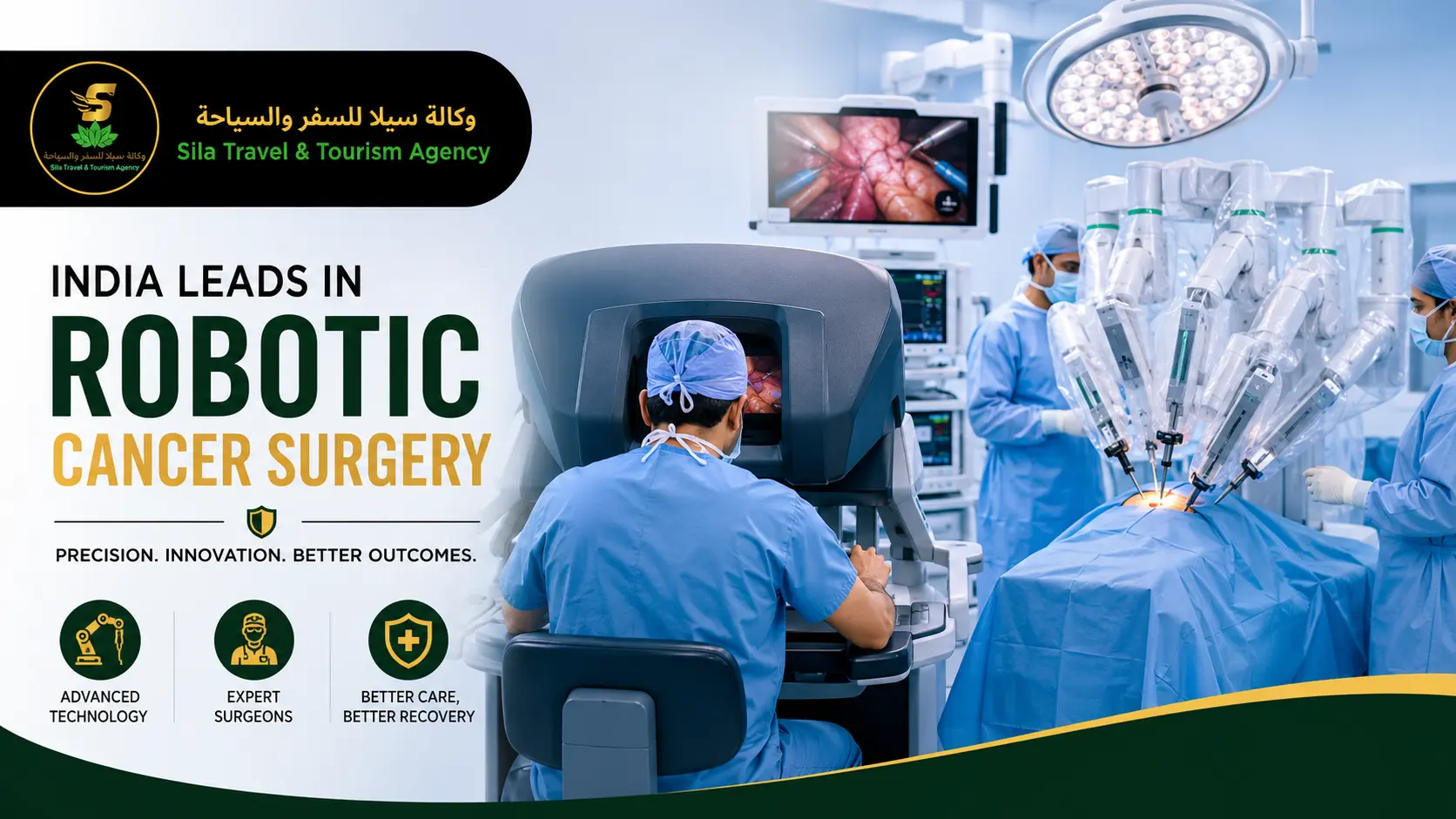
Despite the name, robots do not perform surgery independently. Instead, robotic systems are advanced tools that allow surgeons to operate with enhanced precision, flexibility, and control.
Using a robotic surgical platform, the surgeon controls robotic arms from a specialized console while viewing the surgical field through a high-definition 3D imaging system.
This technology enables:
- Greater surgical precision
- Better visualization of tissues
- Enhanced dexterity
- Reduced damage to surrounding structures
- Improved patient outcomes
Today, robotic surgery is used to treat a wide range of cancers, including prostate cancer, kidney cancer, colorectal cancer, lung cancer, gynecological cancers, head and neck cancers, and gastrointestinal tumors.
India’s Journey Toward Robotic Surgery Excellence
India’s rise in robotic cancer surgery began with a vision to bring world-class medical technology within reach of patients across the globe.
Over the years, leading hospitals invested heavily in:
- Robotic surgical platforms
- Specialized training programs
- Advanced cancer centers
- International collaborations
- Clinical research initiatives
As a result, India now hosts some of the largest robotic surgery programs in Asia, with thousands of successful cancer surgeries performed annually.
What initially started in a handful of major hospitals has now expanded across multiple cities including Delhi, Gurugram, Mumbai, Chennai, Hyderabad, Bengaluru, and Kolkata.
Why Robotic Surgery Is Transforming Cancer Care
Traditional cancer surgery often requires larger incisions and extensive tissue manipulation.
Robotic technology offers several advantages:
Greater Precision
Robotic instruments can move with a range and accuracy beyond the human hand, allowing surgeons to operate in complex anatomical areas with exceptional control.
Smaller Incisions
Most robotic procedures require only a few small incisions, reducing trauma to the body.
Reduced Blood Loss
The enhanced precision minimizes bleeding during surgery and decreases the need for blood transfusions.
Faster Recovery
Patients typically experience:
- Less postoperative pain
- Shorter hospital stays
- Faster return to normal activities
- Reduced risk of complications
Better Functional Outcomes
For cancers affecting delicate structures such as nerves and blood vessels, robotic surgery often helps preserve important functions while effectively removing tumors.
India’s Leading Robotic Cancer Surgery Centers
India is home to numerous hospitals recognized internationally for their expertise in robotic oncology.
Medanta – The Medicity, Gurugram
Medanta has established one of India’s most advanced robotic surgery programs, treating complex cancers across multiple specialties.
Fortis Memorial Research Institute (FMRI), Gurugram
FMRI combines robotic technology with multidisciplinary oncology expertise to deliver highly personalized cancer treatment.
Apollo Hospitals
Apollo’s network has played a pioneering role in introducing robotic surgery to India and continues to lead innovation in cancer care.
Max Super Speciality Hospitals
Max hospitals are known for advanced robotic procedures in urological, gastrointestinal, gynecological, and thoracic cancers.
Artemis Hospital
Artemis offers state-of-the-art robotic surgery programs supported by experienced surgical oncologists and comprehensive cancer care teams.
Types of Cancer Commonly Treated with Robotic Surgery in India
Prostate Cancer
Robotic-assisted radical prostatectomy has become one of the most commonly performed robotic cancer procedures.
Benefits include:
- Improved cancer control
- Reduced blood loss
- Better preservation of urinary continence
- Enhanced nerve preservation
Kidney Cancer
Robotic partial nephrectomy enables surgeons to remove tumors while preserving healthy kidney tissue whenever possible.
Colorectal Cancer
Robotic surgery provides exceptional precision in complex pelvic procedures, helping improve outcomes for colorectal cancer patients.
Gynecological Cancers
Robotic techniques are widely used for:
- Cervical cancer
- Endometrial cancer
- Ovarian cancer
Head and Neck Cancer
Transoral robotic surgery (TORS) allows surgeons to access tumors through the mouth without external incisions.
Lung Cancer
Robotic thoracic surgery enables precise removal of lung tumors while minimizing trauma to surrounding tissues.
The Role of Expert Surgeons
Technology alone does not create successful outcomes.
India’s leadership in robotic cancer surgery is also driven by its highly skilled surgeons who have undergone specialized training in robotic procedures.
Many Indian surgical oncologists have trained at leading institutions in:
- United States
- United Kingdom
- Germany
- France
- Singapore
Their experience allows them to perform highly complex surgeries while maintaining international standards of patient safety and clinical excellence.
World-Class Technology at Competitive Costs
One of India’s most significant advantages is affordability.
Patients can often save between 60% and 80% compared to treatment costs in North America, Europe, and many Gulf countries.
| Procedure | Approximate Cost in India |
|---|---|
| Robotic Prostate Cancer Surgery | USD 6,000 – 12,000 |
| Robotic Kidney Cancer Surgery | USD 7,000 – 15,000 |
| Robotic Colorectal Cancer Surgery | USD 8,000 – 18,000 |
| Robotic Gynecological Cancer Surgery | USD 6,000 – 14,000 |
Despite lower costs, patients receive treatment at internationally accredited hospitals equipped with the latest surgical technologies.
Why International Patients Choose India
Every year, thousands of international patients travel to India for robotic cancer treatment because of:
Access to Advanced Technology
Indian hospitals offer the same robotic platforms used in leading medical centers worldwide.
Highly Experienced Specialists
Patients benefit from surgeons who perform large volumes of robotic cancer procedures annually.
Minimal Waiting Times
Consultations, diagnostics, and surgeries can often be scheduled much faster than in many developed healthcare systems.
Comprehensive International Patient Services
Most major hospitals provide:
- Medical visa support
- Airport transfers
- Accommodation assistance
- Language interpretation
- Dedicated patient coordinators
The Future of Robotic Oncology in India
India’s leadership in robotic cancer surgery continues to grow.
Emerging innovations include:
- Artificial intelligence-assisted surgery
- Image-guided robotic systems
- Enhanced surgical navigation
- Personalized cancer treatment planning
- Integration with precision oncology
These developments are expected to further improve surgical accuracy, patient outcomes, and long-term survival rates.
As healthcare technology advances, India is well-positioned to remain at the forefront of robotic oncology innovation.
How Sila Med Tour Helps International Cancer Patients
At Sila Med Tour, we connect patients with India’s leading robotic cancer surgery specialists and hospitals.
Our services include:
- Free medical report review
- Specialist recommendations
- Hospital selection assistance
- Treatment cost estimates
- Medical visa support
- Airport pickup and transfers
- Accommodation arrangements
- Arabic interpretation services
- Dedicated patient coordination
We ensure patients receive world-class care while enjoying a smooth and stress-free treatment journey in India.
Conclusion
India’s rise as a world leader in robotic cancer surgery is the result of visionary healthcare investments, cutting-edge technology, internationally trained surgeons, and patient-focused care.
Today, patients no longer need to travel to the United States or Europe to access advanced robotic oncology procedures. India’s leading cancer centers offer the same sophisticated technology, exceptional expertise, and outstanding outcomes at significantly lower costs.
For patients seeking precision, innovation, affordability, and hope, India has become one of the most trusted destinations for robotic cancer surgery in the world.
Contact Sila Med Tour today for a free medical opinion and personalized treatment plan from India’s leading robotic cancer surgery specialists.
FAQs
1. What is robotic cancer surgery?
Robotic cancer surgery is a minimally invasive procedure where surgeons use advanced robotic systems to perform precise cancer operations with enhanced control and visualization.
2. Which cancers can be treated with robotic surgery in India?
Robotic surgery is commonly used for prostate cancer, kidney cancer, colorectal cancer, lung cancer, gynecological cancers, and head and neck cancers.
3. Why is India famous for robotic cancer surgery?
India combines advanced robotic technology, internationally trained surgeons, world-class hospitals, and affordable treatment costs, making it a preferred destination for patients worldwide.
4. Is robotic cancer surgery safer than traditional surgery?
Robotic surgery often results in smaller incisions, less blood loss, reduced pain, faster recovery, and lower complication rates compared to traditional open surgery.
5. How can Sila Med Tour help patients seeking robotic cancer surgery in India?
Sila Med Tour assists with medical opinions, hospital selection, doctor consultations, treatment planning, visa support, accommodation, airport transfers, and complete patient coordination throughout the treatment journey.